If you're working for Army aviation, don't go over budget and don't deliver late.
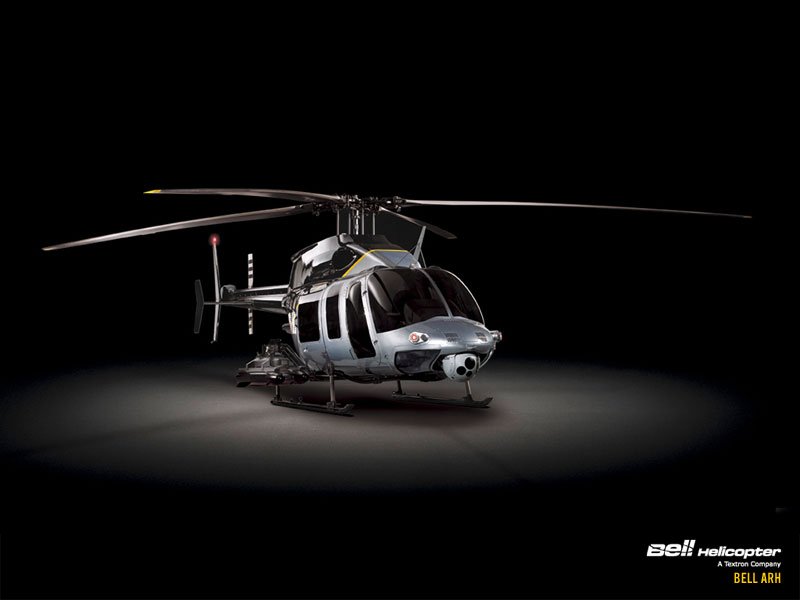
The Army has canceled the ARH-70 scout helicopter as the price soared and years of delays began to pile up. The helicopter was supposed to be $8.5 million but would now cost $14.5M. This was a huge contract for hundreds of aircraft; now it's filed in the lessons-learned category.
The ARH-70 was supposed to be a military conversion of a civilian helicopter. That's still not a bad idea, but you can bet that the next contractors will move a little faster and little more efficiently lest they get fired again.

Showing posts sorted by relevance for query arh-70. Sort by date Show all posts
Showing posts sorted by relevance for query arh-70. Sort by date Show all posts
Thursday, October 23, 2008


Tuesday, October 03, 2006
Random Military/Science/Aviation Thoughts
- So, just how do you disarm a nuclear bomb? You can learn right here thanks to Wired magazine.
- Is the F-22 Raptor really worth it? Some say no, but you don't have to look long to find planes that outclass our F-15, F-16, and F-18. For example, Sukhoi, a Russian aerospace company, continues to improve it's line of advanced fighter-bombers and has come up with the Su-47, a forward-swept-wing fighter that is currently being marketed several countries as a production fighter that can supposedly compete with the Raptor. Even if we don't spend the money on the F-22 and F-35, other countries are going to continue to develop the technology and sell it internationally.
- The Army is getting some new toys to play with. Most people are familiar with the main three Army helicopters: the big, double-rotor Chinook, the ubiquitous Blackhawk, and the newscopter-painted-green Kiowa. But the Army will soon add two new helicopters: the ARH-70 and the UH-72. The ARH-70 is just the military version of a Bell 407 and will replace the similar but older Kiowa as the armed reconnaissance helicopter for the Army. It'll still look like a civilian helicoptor tricked out with a few missiles.
 The small UH-72, however, will fill a niche. Based on the EC-145, it will be used when bigger, more expensive helicopters aren't necessary. It can seat nine and has a unique clam-shell back with a high-set tail rotor. It's a neat little aircraft that can do search and rescue, medevac, utility, transport, and special ops.
 - DARPA is funding another Grand Challenge. That's the race where robot cars have to navigate a course for a cash prize. In the first Grand Challenge in 2004, no robots were able to finish. Last year, several vehicles were able to finish the 132 mile course, with a team from Stanford winning the $2 million prize. This year the robot has to navigate through traffic. The goal is to eventually replace the drivers of Army supply trucks with robots.
- DARPA, the mad scientists of the army, is also throwing a lot of money into limb regeneration. They already have mice that can fully recover from severed spinal cords, heal holes without a scar and potentially grow back severed toes. The hope is that eventually amputees would be able to grow back limbs like salamanders do. How weird is that?
Sunday, December 31, 2006
Army Aviation
If you're an aviation buff, the U.S. Army gives you plenty to gawk at – at least if you like helicopters.
The Army is still buying AH-64 Apache gunships, having just received the 501st one. The latest version of the UH-60 Blackhawk is now in production, and the army will buy 1,200 of them, to replace older, 1980's, models. There is also a new scout helicopter, the ARH-70, and 368 of those are being bought, along with 322 UH-72A Lakotas to replace UH-1's in reserve units. Many of these purchases will take up to a decade to complete. But the army will be buying 150-200 aircraft a year over the next six years. In addition, over 1,600 helicopters are being refurbished as they are returned from service in Iraq and Afghanistan.
The money for these helicopters came from canceling the expensive and unnecessary Comanche scout helicopter. With advances in communication, computers, and unmanned aerial vehicles, these super-expensive helicopters became an expensive redundancy.
The U.S. Army has the largest fleet of combat helicopters (over 4,000) in the world and is the 4th largest air force in the world behind the U.S. Air Force, U.S. Navy, and Chinese Air Force.
Though I've never flown in a helicopter, I've had the pleasure of getting to sit in the cockpit of an Apache several years ago at an airshow. Other airshows have provided the chance to sit in Blackhawks, Hueys, and Chinooks and I can't wait to see the new aircraft up close and personal.
--
Thanks for the info Strategypage.com!
The Army is still buying AH-64 Apache gunships, having just received the 501st one. The latest version of the UH-60 Blackhawk is now in production, and the army will buy 1,200 of them, to replace older, 1980's, models. There is also a new scout helicopter, the ARH-70, and 368 of those are being bought, along with 322 UH-72A Lakotas to replace UH-1's in reserve units. Many of these purchases will take up to a decade to complete. But the army will be buying 150-200 aircraft a year over the next six years. In addition, over 1,600 helicopters are being refurbished as they are returned from service in Iraq and Afghanistan.

The money for these helicopters came from canceling the expensive and unnecessary Comanche scout helicopter. With advances in communication, computers, and unmanned aerial vehicles, these super-expensive helicopters became an expensive redundancy.
The U.S. Army has the largest fleet of combat helicopters (over 4,000) in the world and is the 4th largest air force in the world behind the U.S. Air Force, U.S. Navy, and Chinese Air Force.
Though I've never flown in a helicopter, I've had the pleasure of getting to sit in the cockpit of an Apache several years ago at an airshow. Other airshows have provided the chance to sit in Blackhawks, Hueys, and Chinooks and I can't wait to see the new aircraft up close and personal.
--
Thanks for the info Strategypage.com!
Subscribe to:
Posts (Atom)